
E-3: Develop and maintain competence by engaging in professional development activities (e.g., read literature, seek consultation, establish mentors) ©
Our downloadable PDF review guides have an expanded Ethics section, including the full Ethics Code items, along with multiple ethical decision making models. Click here!
Want a self-paced video course that covers all the test content and more? Click here!
Target Terms: professional development, competence

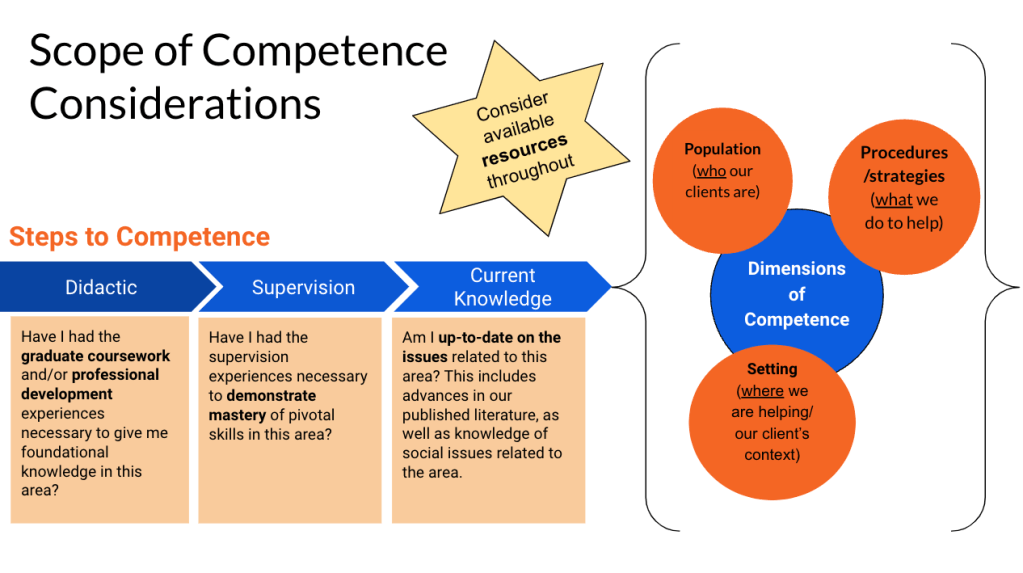
Definition of scope of competence: What the professional, as an individual, is able to do, based on their education, training, and experience.
- Examples: domains of practice in which the professional is educated and trained.
- Non-examples: everything else 🙂
Definition of scope of practice: What the profession, as a whole, is able to do. (Some states have more restrictive rules about this than the BACB® itself.)
- Examples: Consulting on classroom behavior, feeding disorder treatment.
- Non-examples: surgery, piloting planes.
Our job is to stay within our scope of practice, while attaining and expanding competence. Here re some ways we can do that:
- Read literature: This includes staying up to date on peer-reviewed literature within our field, and specifically within our domains of practice.
- Seek consultation: Consultation is professional advice from a professional peer with competence in an area we are still growing in. Consultation could come from someone in our own profession (a.k.a. behavior analysis) or another profession (e.g. speech pathology). Seeking consultation can be a great choice if we are encountering some challenges in our clinical work. Consultation helps our client get the care they need, while also giving us an opportunity to expand our expertise. Consultation is different from supervision because it is not hierarchical.
- Establish mentors: Mentors are people who have a strong competency in area(s) we are still growing in, and who have an ongoing relationship with us as we expand our skills. Mentorships can be formal or informal, and they can come from faculty relationships, senior colleagues, supervisors, etc.
Please note some super important FAQs about the Ethics part of the TCO:
Is the Ethics Code part of the Task List or Test Content Outline? Well..not really. Unlike the rest of the TCO, which is its “own thing,” Part E is really a highlight reel of a separate and longer document. That document is called the Ethics Code for Behavior Analysts (link here). Remember that the TCO reflects the parts of the Ethics Code that will show up on the certification exam.
If I go through the TCO items in section E, do I really need to read the actual code? Seems long and boring. YES, you totally and absolutely DO need to read the entire Ethics Code for our profession. Prepping to be a professional is not just about passing a test.
How do I interpret the Ethics Code in specific situations? That’s not for us to tell you. The ethics sections were trickier for us to put together than the other items in the review section. That’s because the items having to do with the science of behavior are straightforward, in a factual sense. Ethics codes are subject to interpretation, cultural influence, and changes over time. We have done our best to help you understand without telling you what to think. Our best advice? Become familiar with ethical problem solving models, and talk to colleagues, supervisors, and mentors.